Children and schools
Can a school track my child on the school bus?
A GPS unit on the bus is not the same as an app that follows the child. Section 9 restricts tracking of children. Here is what to ask before you tap yes.
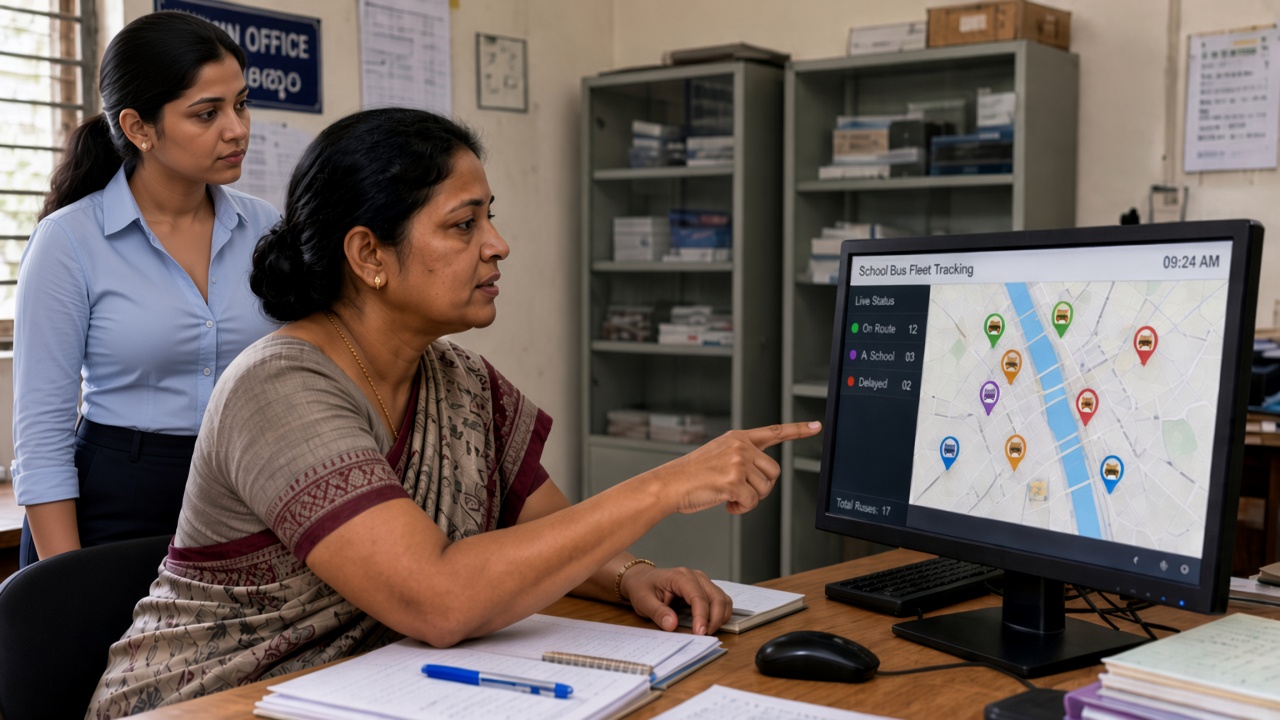
Two different systems that get sold as one
Many schools now offer a “safe bus” app. Some of those products only show where the vehicle is: a GPS box on the dashboard, a route, an estimated time at your stop. That is information about a bus. Other products show whether your child boarded, which seat or RFID tag moved, and a live trail of the child from gate to stop. That is information about the child. Under the DPDP Act, the second design is processing of a child’s personal data, and it is much closer to tracking.
The school that chooses the product is the Data Fiduciary. The GPS vendor is usually a Data Processor, unless it starts using the data for its own purposes. You act for the child as parent or guardian. Location over time can reveal home, tuition, a grandparent’s house, and the exact minutes the child is unsupervised at a stop. Treat it as sensitive even though the Act uses one definition of personal data.
What Section 9 says about tracking
From 13 May 2027, Section 9 will require verifiable parental consent and restrict tracking of children. Rule 12 and the Fourth Schedule set specific exceptions. An educational institution may track children for educational activities or for their safety. A transport operator engaged by the school may track a child’s location for safety during the journey to or from school.
The Fourth Schedule also covers real-time location tracking where it is needed for a child’s safety. The conditions limit what the school and transport operator may do with the data. Ask which exception the school relies on and how the tracker stays within it.
Safety is a purpose, not a blank cheque
Parents want to know the bus left, that it is on the usual road, and that the child got off at the right stop. Those are real safety purposes. The Act still asks whether the school needs a second-by-second child trail to do that job, who else can see it, and how long it is kept. A vendor that keeps months of routes to “improve the product”, or that shows every parent every child’s boarding time, has gone past the safety purpose.
A school can rely on a Fourth Schedule exception only for processing that meets its stated conditions. A live map open to every parent, or storage of journeys for unrelated product work, calls for a separate explanation and lawful basis. Ask whether the school can provide vehicle-level updates for your route.
Who sees the map
Ask for a list. Does only the transport in-charge see the live map, or every teacher, or every parent in the class group? Can a driver watch other routes after hours? Does the vendor’s support staff in another city have access? Is the app account shared on a family phone that also has games and unknown downloads? A safety tool that is leaked into a WhatsApp screenshot is still a leak of a child’s location.
Processors must be bound by contract to use the data only as the school instructs. If the vendor’s privacy policy says it may use location to build advertising products, that is not a school-bus purpose and it collides with the ban on targeted ads directed at children. Ask the school to name the vendor and to confirm, in writing, that child location is not used for ads, scoring, or sale.
Retention and what happens after the ride
Once the child is home, the live need is over. Keeping a short log in case of a dispute or an accident may be reasonable. Keeping a year of trails “because the cloud plan includes it” is not a purpose. Ask when the points are deleted, whether backups age out, and whether a left school still has last year’s routes. You can ask for erasure of extra history under Section 12 except where a named law requires a record, for example after a specific incident that is under inquiry.
If the child stops using the bus, the tracker should stop. An old RFID card that still pings, or an app account nobody closed, is leftover processing. Ask the school to disable the tag and to delete the app profile. Withdrawal of consent for a child-level tracker should be as easy as the SMS that invited you to download the app.
Questions to put in writing
Ask whether the system tracks the bus, the child, or both. Ask for the notice, the vendor’s name, who can see live location, how long points are stored, and whether you can use the bus with only vehicle-level updates. Ask them to confirm there is no advertising, no behavioural score, and no sharing with other parents of your child’s boarding time. If they cannot answer, treat the tracker as optional until they can.
A factual letter is enough. You do not need to accuse anyone of bad faith. If the school ignores you, use its grievance channel, then the Data Protection Board if that channel fails. This site can help you draft the notice. It is not a law firm. The Act, the Rules, and any exemption the government actually notifies are the last word.
More guides
- Does my child’s school need consent to take attendance?
- Cameras on the school bus: what parents can ask
- Photos of my child at a school event
- All DPDP guides
Ready to use a right? Draft a notice in your browser. Official text always wins over a summary. Draft a notice